


Article: Calm in the rush – a guest at the final of the Best Sommelier of the World in Lisbon
Calm in the rush – a guest at the final of the Best Sommelier of the World in Lisbon
Sixty-six candidates, one theatre, three finalists. At the final of the ASI Best Sommelier of the World in Lisbon, precision becomes peak performance. And the greatest art lies in making it look effortless.
It is mid-October, and Lisbon takes its time. The light moves slowly across the rooftops, and in the narrow streets your pace slows all by itself. Just a few streets away, every second counts this evening: at the Coliseu, the best sommelier in the world is being crowned.

The final of the ASI Best Sommelier of the World has returned here for the first time since 1978 – the competition the industry reverently calls the world championship of sommeliers. 66 candidates had travelled to Lisbon; after the quarter- and semi-finals, three remained. It was my first time. And I had no idea how much you miss from a seat in the theatre.


A hall holds its breath
The Coliseu dos Recreios is a house made for grand appearances: a dome of delicate steel ribs, tiers rising up to the roof, an ornate proscenium arch and, behind it, velvet the colour of olive leaves. More than 600 guests sat in the hall that evening, and another 3,000 watched the livestream. What they witnessed was the opposite of a spectacle. And that is exactly where its power lay.

In the stalls sat sommeliers who had competed in the earlier rounds themselves, winemakers, wine journalists, people who have dedicated their lives to wine. An audience that knows exactly what is being asked on stage, and behaves accordingly. As soon as a finalist stepped up to the table, the hall fell silent. No whispering, no rustling. Only held breath.
It was the silence of connoisseurs rooting for them – for all three, it seemed – and taking care not to disturb the fragile balance. Between the tasks it dissolved into warm applause, only to return moments later. Piotr Kamecki, ASI Vice President for Europe, later spoke of a tension you could feel in every single member of the audience. I felt it too, even though nothing was at stake for me.
All the time in the world
Anyone who has ever worked in service knows the silent arithmetic of hospitality. Too slow, and the guest waits. Too fast, and they feel rushed. True hospitality finds a third tempo: one that looks like leisure at the table, while behind it every second is being counted.
On the stage of the Coliseu, this arithmetic became literal. Every task ran against the clock, and yet the jury demanded what great sommeliers give every evening: the feeling of having all the time in the world. Speak clearly. Listen. Pour precisely, in the right amount and the right order. Never let the pressure reach your fingertips.
Therein lies the paradox of this evening. The greater the skill, the more invisible the effort. Concentration, speed, precision, attentiveness and warmth, all at once, in the spotlight, in front of the jury and a full house. The true mastery lay in nobody at the table noticing any of it.
A decathlon at the table
On paper, a final like this is a sequence of tasks. In the hall, it resembles a decathlon in which every discipline demands a different kind of mastery.
The tasting, in which wines are identified precisely and swiftly in front of the jury. A mise en place hiding several mistakes at once. A vintage port that demands patience when pouring. A French 75, mixed with the composure of a bartender on a quiet Tuesday evening. The wine pairing for a set menu, course by course, an exercise in knowledge and imagination. And, very much a child of its time, the task of exposing counterfeit labels, in an era in which artificial intelligence can recreate almost anything deceptively well. Each task a small world of its own. Together they paint the portrait of a profession.
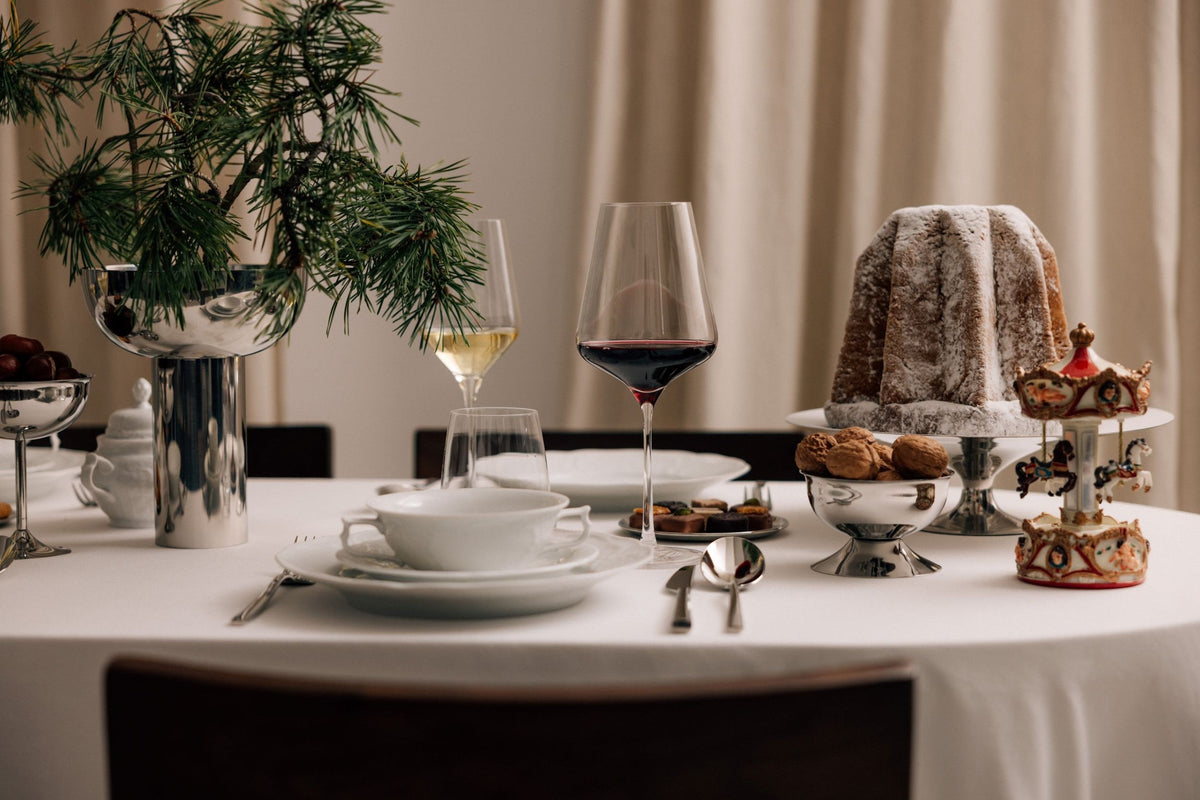
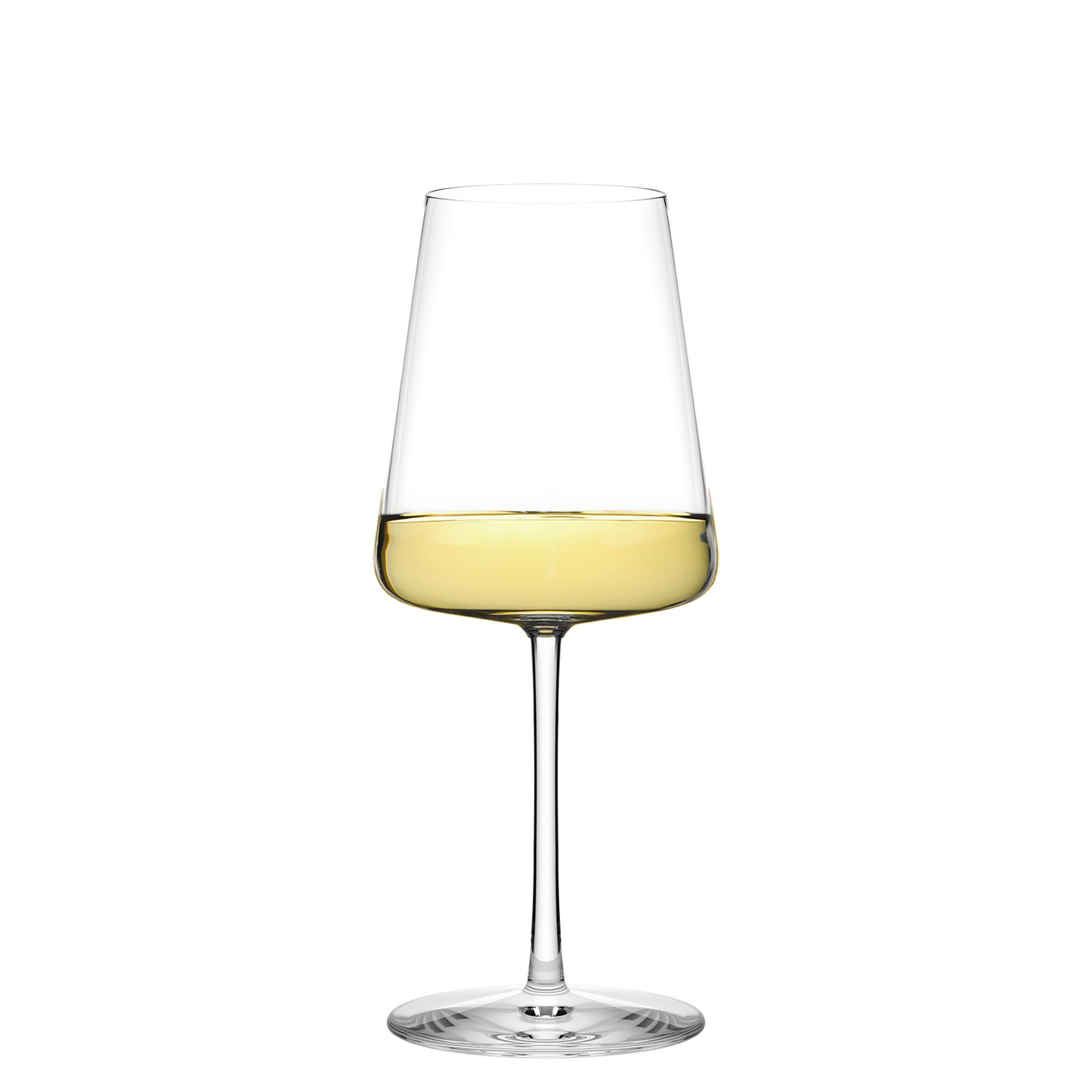
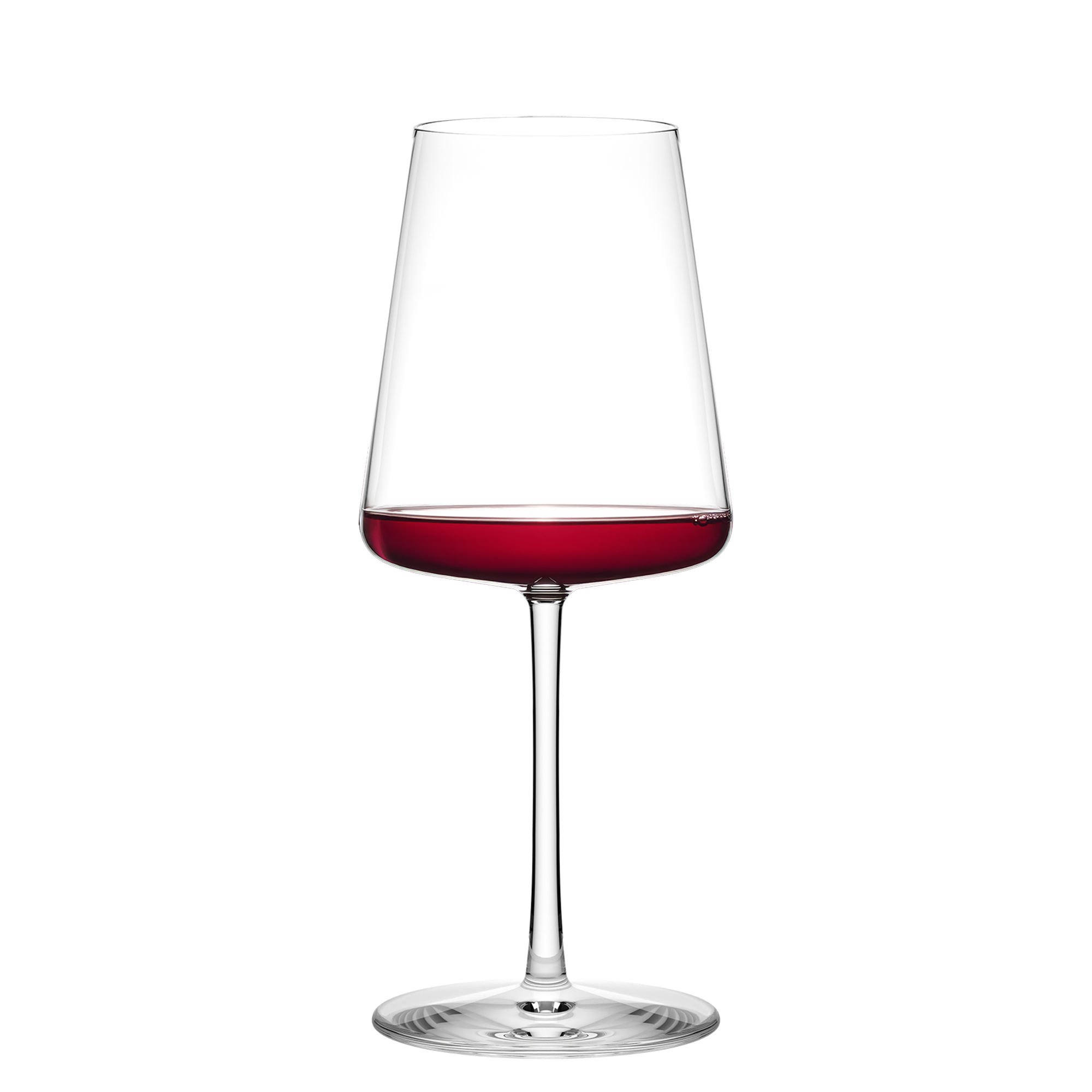
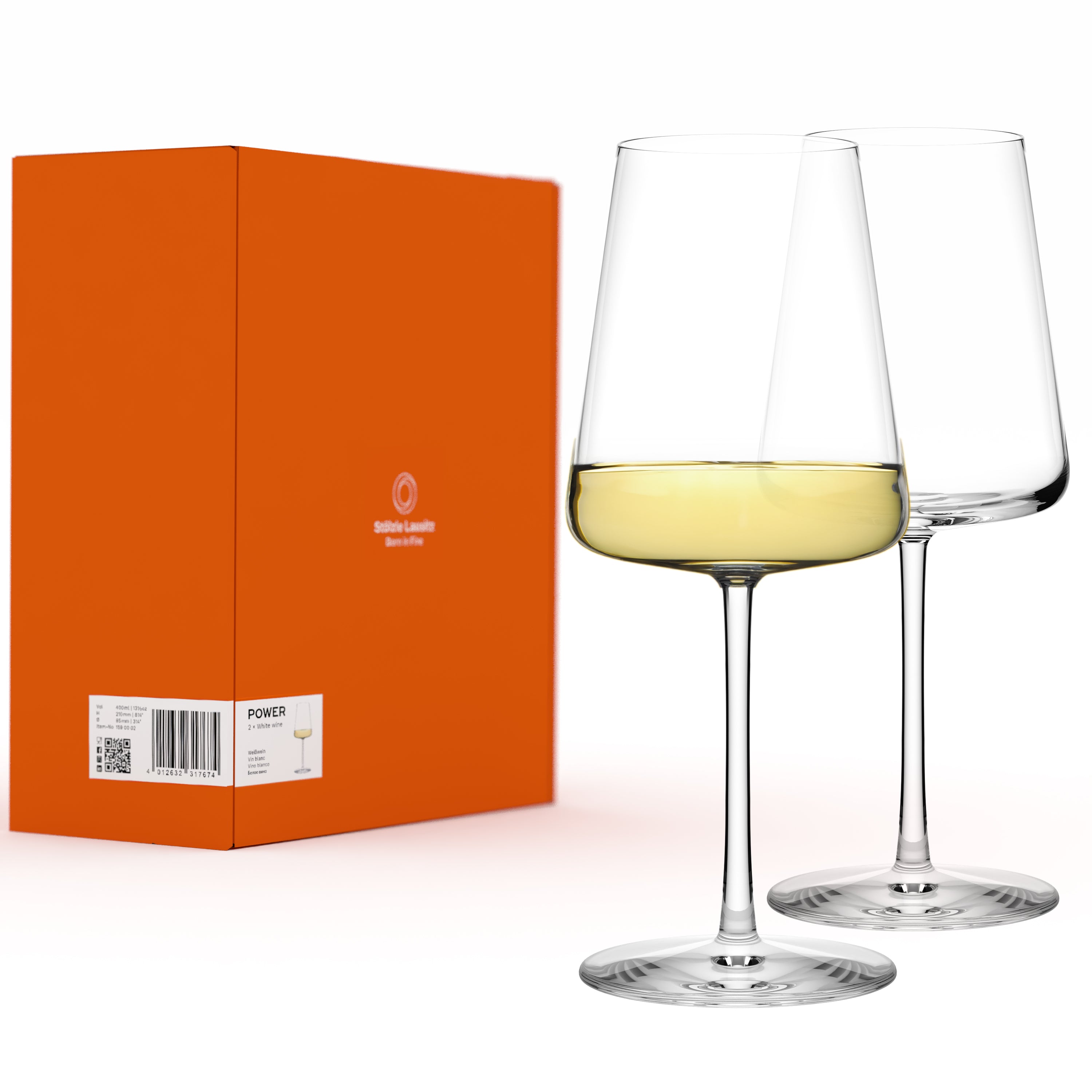
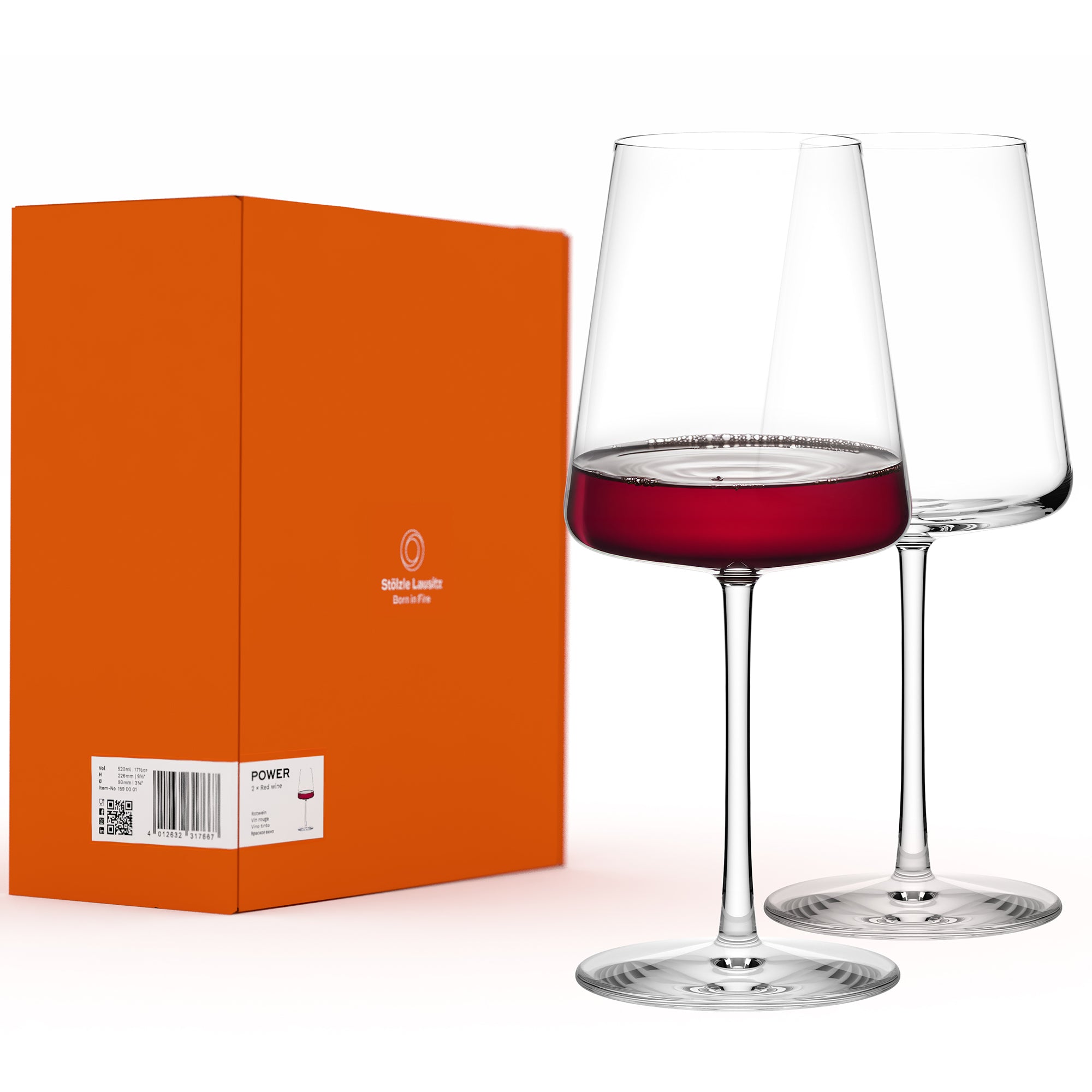
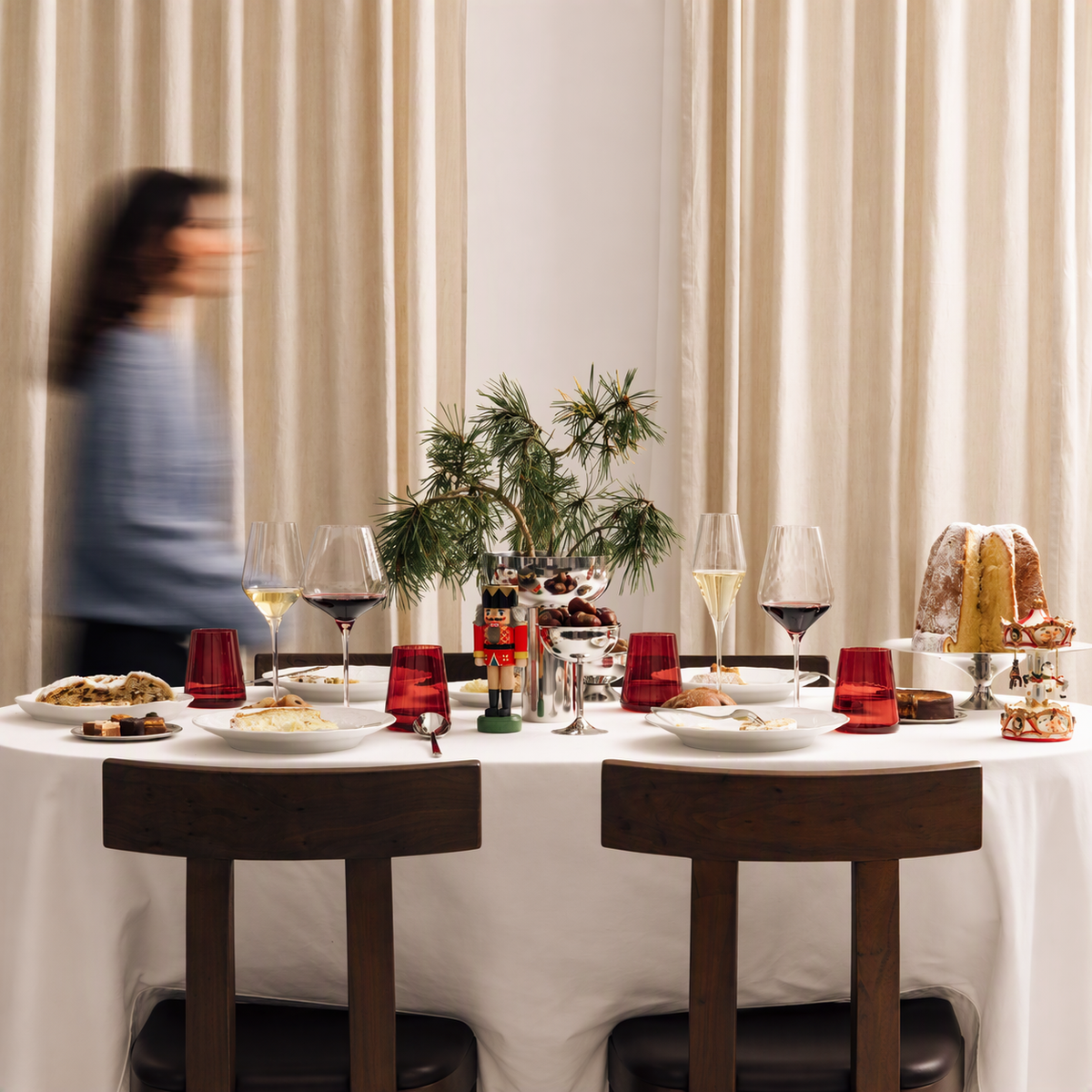
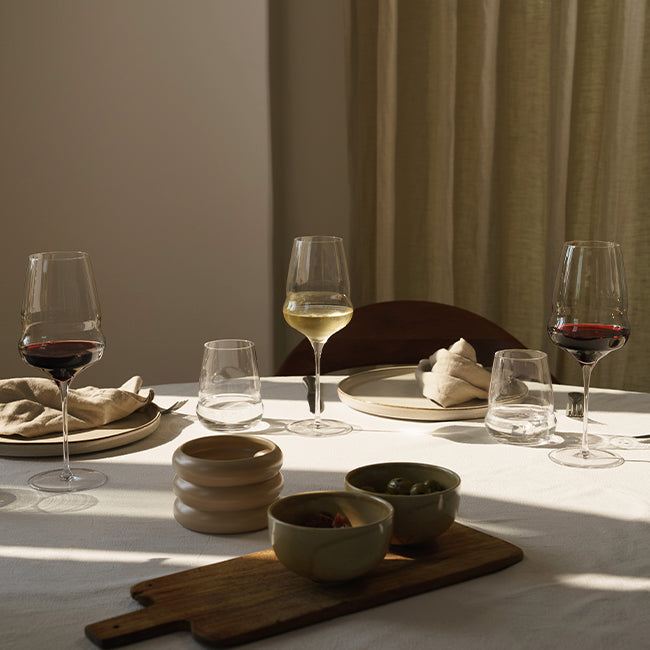
For Stölzle Lausitz, the competition's glass partner, some of these moments were particularly close to home. The tables were set with glasses from the Fino series, and the vintage port was brought to the table in the Fire decanter. Admittedly, you look more closely then. On a stage like this, a glass is not decoration but part of the test: how it stands, how it feels in the hand, how the wine moves within it. The best handle it so naturally that you forget it is there. For anyone who makes glasses, there is no finer compliment.
Moments, captured
The theatre has no pause button, but photography does. Looking through the pictures later, it was not the big gestures that held my attention, but the seconds in between. Those moments in which each of the three is completely alone, with themselves and a glass.
I sent the finalists their photos and asked them which thoughts, feelings and memories these pictures bring back. Their answers stand here next to my observations: the view from the stage next to the view from the stalls.
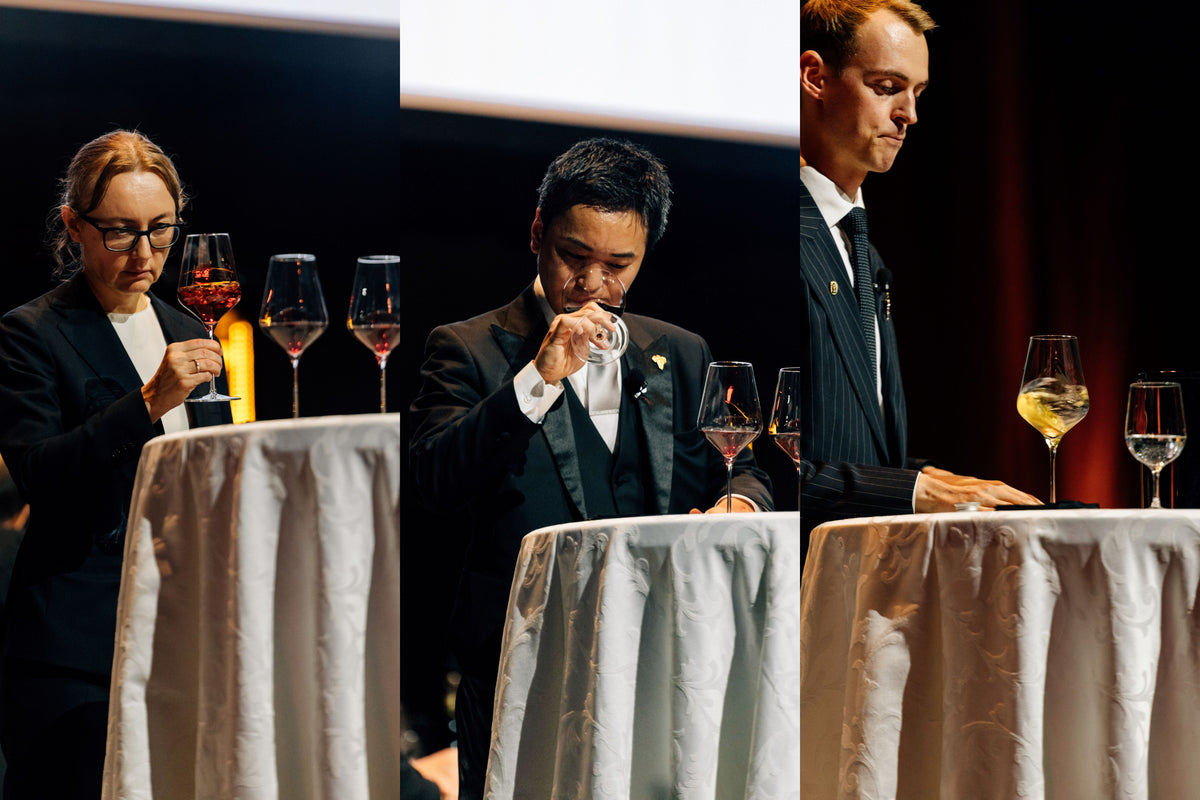
Nikolai Haram Svorte, Norway. Pinstripe suit, hands flat on the white tablecloth, eyes lowered as he describes the wine in front of him to the jury. In another picture his eyes are closed, the glass at his lips, his free hand on his wrist, exactly where a watch would usually be. Habit, or a quick check of the time? I don't know. I have rarely seen a more honest image of time pressure.


1. Looking at these photos, what thoughts, feelings or memories come back?
Now 5 weeks later I'm still reliving the final in my mind every day. It was an unforgettable day with a surreal mix of stress, pressure and anxiety, but also relief, happiness and focus. Looking back at the pictures of the tasting tasks brings back a lot of emotions, and in my blind tasting career I don't think I've ever been more focused and in tune with my senses than I was during the final.
2. On stage, was there room to think about how it was going, or did time leave no space for that?
There was definitely a lot of time pressure in the final. When I'm on stage, I try to focus all of my attention on the next task at all times, so I didn't dwell much on how it was going, even when I made mistakes.
3. What was happening in that moment that the audience could not see?
I think perhaps I appeared more calm from the audience perspective than how I actually was feeling inside. Being the first candidate to enter the stage, just a few minutes after the finalists were announced, was a big challenge, and I think I needed to go through a couple of tasks before my mind started to function properly. I was very stressed in the beginning, but then I think I found my flow.
Instagram: Nikolai Haram Svorte
Pascaline Lepeltier, France. She holds the glass up against the darkness, the wine still swirling, three more glasses waiting in a row beside her. Her gaze: calm, searching, entirely present. In a black-and-white shot she is already on to the next wine, the following glass already in her other hand. Two thoughts at once, and no trace of strain.


1. Looking at these photos, what thoughts, feelings or memories come back?
A little sadness, then the desire to continue to work and improve. This is the task I failed during the final, the last blind tasting, a task for which I worked over and over for months, a task I was very good at the day before, and in the quarter-final... but I did not manage it well that day, with wines I should have recognized immediately, and I know by heart, where I should not have doubted. So the picture is a symbol of humility, a sign I need to continue to understand and work.
2. On stage, was there room to think about how it was going, or did time leave no space for that?
I felt like there was very little to no time to think beforehand actually, as usually you have a little time to drink water and breathe between each task. It felt like it was non stop this time. So this is where you need to learn how to carve even 2-3 seconds, to focus again - as some tasks like service, if you want to do them well, with precision but heart & kindness, you have to be 99% in them (1% to be able to have a little step back to control).
3. What was happening in that moment that the audience could not see?
I was confused. I had a first thought it could be nebbiolo, but I knew I had already mentioned Piemonte in the first blind tasting of the final, and I did not want to call it again twice (that first blind tasting threw me off too as I could not recognize anything, except the winemaking style of the white wine from Australia, which is incredibly rare for me not to have any clue about a flight of 4 wines... It took some confidence away as I thought then I was not in a good blind tasting day.)
This is when your brain starts to work too much. As I picked up some alcohol, and tannins were pretty soft, I artificially built the case for CNP with the idea of a decent amount of syrah/mourvèdre for the tannins. I had to take a road, and I took the wrong one. So many things go through the mind at that moment. I should have taken a break, recover for 20, 30 seconds, and go back at it. I did not. Lesson learned.
Instagram: Pascaline Lepeltier
Wataru Iwata, Japan. Tailcoat and waistcoat, a row of glasses in front of him. In one picture he raises a glass to his nose, lips slightly parted, as if the first word were already on the tip of his tongue. In the next he tastes with his eyes lowered and seems to have long since left the hall. From the outside it looks effortless. You'd love to know how loud it was inside him.


1. Looking at these photos, what thoughts, feelings or memories come back?
Looking at the photos you shared, they definitely remind me of the very intense time on the stage. I had never tasted wine under such an atmosphere, but I think I did a good job with the tasting part.
2. On stage, was there room to think about how it was going, or did time leave no space for that?
Yes. I wasn't really stressed or nervous on stage. I was able to act just like I usually do at the restaurant, so I actually had a moment to reflect on how everything was going.
3. What was happening in that moment that the audience could not see?
The waiting time. I was third to go on, and I had to wait for about two hours with nothing to do. I'm not good at waiting, so that was a really stressful moment for me, to be honest.
Instagram: Wataru Iwata
From the outside, these are portraits of perfect calm. From the inside, one suspects, they look different: a hundred small decisions per minute, the clock always at the back of the mind, a voice that knows only one word: onwards. It is precisely this gap between what we saw and what they experienced that is the real subject of these pictures.
Nikolai Haram Svorte from Norway is ASI Best Sommelier of the World 2026, Pascaline Lepeltier from France came second, and Wataru Iwata from Japan third. When the three finally stood on stage together, it did not look like one victory and two defeats, but like three people who had just achieved something extraordinary. Sommeliers perform in front of an audience every evening, at the table, in front of their guests. Only rarely in front of 600 at once.
What counts in the end
By the end of the evening, one thing is clear: this title is not won in a single discipline. Many can taste brilliantly, and just as many can serve impeccably. Some spot the one mistake that everyone else misses. The final asks a different question: whether someone masters all of this at once. Knowledge and warmth, speed and care, strong nerves and humility. And whether they can switch between all of it without the seams showing.
Olivier Poussier, himself world champion in 2000, found the right words: only one can win, but all 66 who qualified are an inspiration to sommeliers all over the world. Earlier in the evening they had stood side by side on stage, a long, dark line of suits in the spotlight. An image that stays with you.
The entire final can be watched as a recording on the ASI YouTube channel: watch the livestream. A rewarding evening for anyone who would like to see what pressure looks like when you can't see it.
More about the Association de la Sommellerie Internationale